
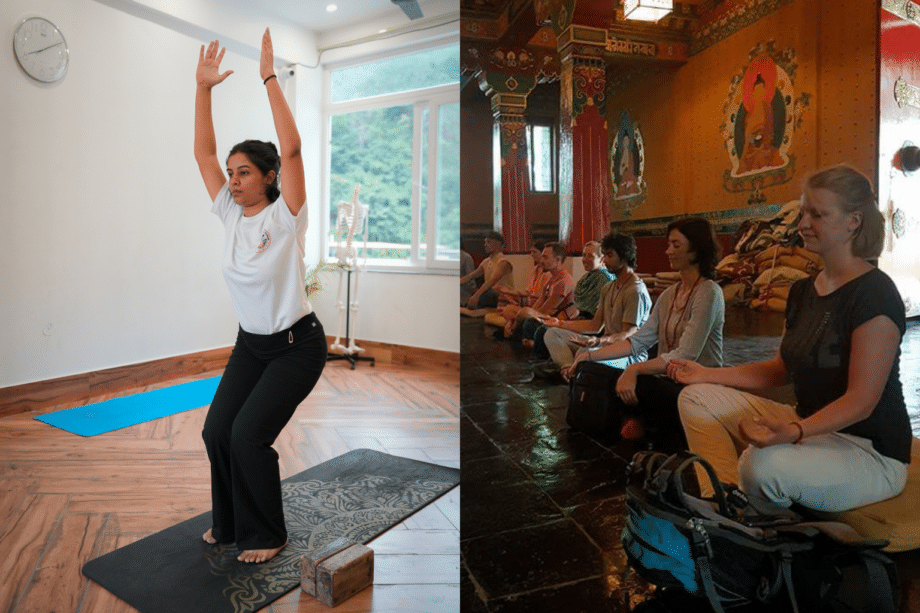
Dharamshala vs. Rishikesh for a Himalayan Yoga & Meditation Retreat: Weather by Month, Culture, and Travel Logistics
Planning a spiritual vacation in northern India? Should you choose Meditation Teacher Training Dharamsala or Meditation Teacher Training Rishikesh? Both Dharamshala and Rishikesh are premier spiritual centres, yet each offers a fundamentally different environment, philosophy, and daily rhythm.
Dharamshala, deeply rooted in Tibetan Buddhist traditions, provides an introspective, alpine sanctuary. Rishikesh, celebrated as the world capital of classical yoga, thrives on Vedic ashram life and sacred rituals. Selecting the right destination directly shapes your practice, physical comfort, and learning outcomes.
Dharamshala Vs. Rishikesh – Understanding The Main Differences
Geographical Nuance: Dharamshala
McLeod Ganj & Upper Dharamkot, perched 9 km higher up the mountain ridge, house the region’s meditation centres and yoga studios. The altitude difference creates noticeably cooler, mistier weather than in the valley below.
Rishikesh: Foothills and River Banks
Rishikesh sits at an altitude of approximately 356 metres in the foothills of Uttarakhand, bisected by the glacial turquoise waters of the Ganges. The town’s retreat life clusters across distinct neighbourhoods: Tapovan, Swarg Ashram, and Lakshman Jhula/Ram Jhula.

Weather by Month – When Is the Best Time to Visit?
Month Dharamshala (McLeod Ganj) Weather Rishikesh Weather Retreat Suitability
| January | Cold alpine winter; freezing nights; occasional ridge snowfall | Brisk winter; foggy mornings, clear sunny afternoons | Rishikesh is prime for active asana; Dharamshala requires heavy thermals |
| February | Chilly with crisp sunshine; cold evenings | Crisp, temperate; ideal outdoor temperatures | Excellent for both; pack layers for high altitude |
| March | Mild spring; rhododendrons bloom | Warm, pleasant spring; International Yoga Festival season | Peak season across both regions; comfortable open-air practice |
| April | Pleasant, clear mountain days; cool nights | Warm to hot; dry heat starts building | Dharamshala is ideal; Rishikesh warms up by midday |
| May | Warm alpine days; fresh mountain air | Hot; intense afternoon sun | Dharamshala is prime; Rishikesh early-morning/late-evening practice only |
| June | Warm early June; pre-monsoon showers bring cool relief | Very hot early June; humidity rises with late showers | Dharamshala offers refuge from the plains’ heat |
| July | Heavy monsoon; dense mist, torrential rain | High humidity, heavy downpours, river surges | Quiet, contemplative indoor retreats; travel delays likely |
| August | Heaviest monsoon downpours; high humidity, lush greenery | Humid with frequent rain; Ganges runs high | Best for focused, indoor philosophical and meditation study |
| September | Monsoon recedes mid-month; crisp air, dramatic valley views | Rain tapers; warm and moderately humid | Post-monsoon freshness; excellent across both locations |
| October | Clear skies, golden autumn days, cool nights | Sunny, mild, pleasant weather | Peak retreat season; clear Himalayan views and outdoor study |
| November | Crisp, cold autumn-winter transition; sharp nights | Pleasant sunny days, brisk evenings | Perfect for disciplined ashram life and silent retreats |
| December | Cold winter begins; frosty mornings | Chilly mornings and nights, mild days | Ideal for quiet retreats; pack serious winter woollens for Dharamshala |
Culture and Spiritual Traditions: Tibetan Influence vs. Yoga Heritage
Dharamshala’s Buddhist Enclave: Centred on the Tibetan settlement in exile, McLeod Ganj is filled with maroon-robed monks, prayer wheels, and Tibetan script flags fluttering through cedar forests. The spiritual practice here centres around the mind: understanding consciousness, practicing loving-kindness (Metta), and deep Vipassana (insight) meditation.
Rishikesh’s Living Ashram Culture: Rishikesh is steeped in ancient Sanatana Dharma. For millennia, sages have meditated along its riverbanks. The atmosphere is oriented around devotion (Bhakti), body purification, classical Hatha discipline, Patanjali’s Ashtanga framework, and Vedic study, anchored each twilight by the Ganga Aarti at Parmarth Niketan and Triveni Ghat.

Meditation Teacher Training Dharamsala vs. Meditation Teacher Training Rishikesh
Enrolling in Meditation Teacher Training Dharamsala suits practitioners drawn to secular mindfulness, neurological models of meditation, and Buddhist contemplative practices.
Conversely, a Meditation Teacher Training Rishikesh immerses you in the broader yogic matrix. It offers breath regulation (pranayama), internal energy locks (bandhas), mantra chanting, and deep guided relaxation (Yoga Nidra).
Why Choose A Yoga Retreat In Dharamsala?
While Rishikesh has a higher density of classical schools, booking a Yoga Retreat in Dharamsala offers unique advantages for seekers wanting stillness:
- Natural Cooler Climate
- Deodar Pine Sanctuary
- Pace and Reflection
- Integrated Mind-Body Study.
Travel Logistics – How To Reach Dharamshala And Rishikesh
Both destinations are accessible via air, rail, and road from New Delhi, but travel times vary considerably.
Find The Right Setting For Your Spiritual Journey
Neither destination is universally better—each serves as a distinct energetic doorway to inward study.
Assess your personal practice, choose the climate and season that support your body, and take the first step toward your Himalayan retreat.
Mantra Yoga Meditation School offers the best trainings. Contact us today for more details.
