
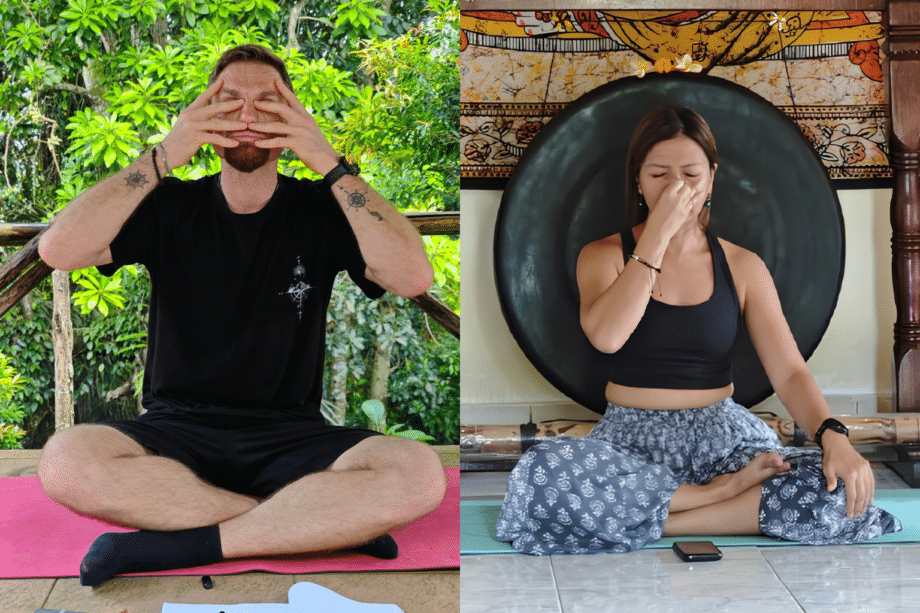
The 7 Core Pranayama Techniques: Step-by-Step Practice, Timing, and Contraindications
Pranayama is the traditional yogic discipline of conscious breath regulation, designed to influence energy, focus, and physical steadiness. The seven core types of pranayama are Nadi Shodhana, Kapalabhati, Bhastrika, Bhramari, Sheetali & Sheetkari, Ujjayi, and Anulom Vilom. Different pranayama techniques for beginners serve distinct purposes.
The Golden Rules Of Breath Control: Empty Stomach, Posture, And Nostril Cleanliness
Empty stomach: Traditional guidelines recommend practising before meals or after allowing adequate time for digestion. Ensure you feel light and comfortable.
Correct posture: Choose a stable, symmetrical seated position that you can maintain without strain, such as Sukhasana, Vajrasana, or sitting upright on a firm chair with feet flat on the floor.
Nostril cleanliness: Comfortable nasal breathing is essential. If congestion blocks a nostril, avoid forcing air through it. Traditional cleansing methods like Jala Neti require qualified instruction and sterile, lukewarm saline water.
The Complete Guide To Pranayama: 7 Core Breathing Techniques And How To Practice Them
Nadi Shodhana (Alternate Nostril Breathing): Balancing The Hemispheres
Traditionally, Nadi Shodhana is practised to balance the flow of prana through the nadis. Among the primary Nadi Shodhana benefits are reduced perceived stress, improved breath awareness, and a grounded transition into meditation.
Step-by-Step Practice
- Sit comfortably with your spine upright and shoulders relaxed.
- Position your right hand in a comfortable nostril-control gesture.
- Close your right nostril gently with your thumb and Inhale slowly through your left nostril.
- Switch nostrils by closing the left with your ring finger, release the right, and Exhale slowly through your right nostril.
- Inhale gently through your right nostril.
- Switch again, closing the right nostril, and Exhale slowly through your left nostril to complete one cycle.
- Repeat the cycle slowly without forcing the breath.
Kapalabhati (Skull Shining Breath): Metabolic Detox And Awakening
Kapalabhati, as a shatkarma (cleansing technique), uses short, active exhalations driven by quick abdominal contractions, paired with effortless, passive inhalations.
Kapalabhati Step By Step Practice
- Sit upright in a comfortable, stable seated position.
- Relax your shoulders, face, and abdominal muscles.
- Inhale gently and naturally through your nose.
- Exhale actively through your nose using a brief, gentle inward contraction of your lower abdomen.
- Allow the inhalation to happen naturally as your abdomen relaxes.
- Begin with a small number of gentle repetitions at a steady, unhurried pace.
- Pause and return to normal breathing before deciding whether to continue.
Bhastrika (Bellows Breath): Energising The Core
Bhastrika mimics the action of a blacksmith’s bellows. Bhastrika uses equal, active force on both the inhalation and exhalation.
Step-by-Step Practice
- Sit upright in a comfortable position with an open chest.
- Relax your face, jaw, and shoulders.
- Inhale gently and actively through your nose, expanding your chest and abdomen.
- Exhale actively through your nose at a similar controlled pace.
- Continue for a small number of measured cycles without straining.
- Stop the active breathing and return to natural respiration.
- Rest quietly and observe how your body feels.
Bhramari (Bee Breath): Nitric Oxide Production And Instant Vagal Calming
Bhramari pairs a slow inhalation with a steady, gentle humming sound during exhalation.
Step-by-Step Practice
- Sit comfortably with your eyes gently closed, if comfortable.
- Relax your jaw, keeping your teeth slightly parted and lips softly closed.
- Inhale slowly and quietly through your nose.
- Exhale gently while producing a smooth, low-pitched humming sound.
- Feel the subtle vibration around your face and forehead without straining your throat.
- Repeat for several comfortable cycles.
- Rest quietly and notice your natural breath.
Bhramari Pranayama for Sleep: Incorporating 5 minutes of gentle humming into an evening routine can help transition the mind away from daily stimulation before bed.
Sheetali And Sheetkari: Cooling The System
Sheetali and Sheetkari are unique because inhalation occurs through the mouth. Both rely on moistening incoming air.
Step-by-Step Practice
Sheetali
- Sit comfortably with your spine upright.
- Extend your tongue gently and roll its lateral edges upward into a tube, if physically possible.
- Inhale slowly and smoothly through the rolled tongue.
- Close your mouth and draw your tongue back in.
- Exhale gently through your nose.
- Repeat for a few comfortable cycles without overbreathing.
Sheetkari
- Sit comfortably and relax your facial muscles.
- Position your upper and lower teeth lightly together, parting your lips and resting your tongue flat behind your teeth.
- Inhale gently through the gaps between your teeth, creating a soft hissing sound.
- Close your mouth.
- Exhale slowly through your nose.
- Repeat smoothly without forcing the breath.
Ujjayi (Victorious Ocean Breath): Grounding The Mind In Asana
Ujjayi involves a subtle narrowing of the glottis, creating a soft, oceanic whisper on both inhalation and exhalation.
Step-by-Step Practice
- Sit comfortably and relax your throat and jaw.
- Inhale slowly through your nose.
- Slightly narrow the back of your throat to create a soft ocean-like sound.
- Exhale slowly through your nose while maintaining the same gentle sound.
- Continue breathing smoothly without friction or strain.
- Release the throat constriction immediately if dryness or tension develops.
Anulom Vilom Vs. Nadi Shodhana: Clarifying The Confusion
Anulom Vilom and Nadi Shodhana are frequently used interchangeably. Generally, both involve alternate-nostril breathing.
Safety Matrix: Blood Pressure, Pregnancy, and Heart Precautions
Having a health condition does not necessarily mean avoiding all breathing exercises, but it does require choosing gentle options and consulting a qualified professional.
How To Practice Pranayama Daily
Learning how to practice pranayama daily is most effective when you prioritise consistency over intensity. Start with 5–10 minutes a day using gentle, unforced techniques, and keep a brief journal noting how your breath and focus feel afterwards.
The best time to do pranayama is whenever you can practise consistently on a relatively empty stomach in a calm environment.
Pranayama Precautions: Avoid stimulating practices like Kapalabhati or Bhastrika late at night, as they may increase alertness and interfere with winding down.
Build Your Daily Practice
Ready to establish a steady, safe routine at home? Download our Free 7-Day Pranayama PDF Guide, designed specifically for beginners. Enter your email address below to receive your copy directly in your inbox:
Explore our Residential Yoga Courses at Mantra Yoga Meditation School. Contact us today for more details.
