
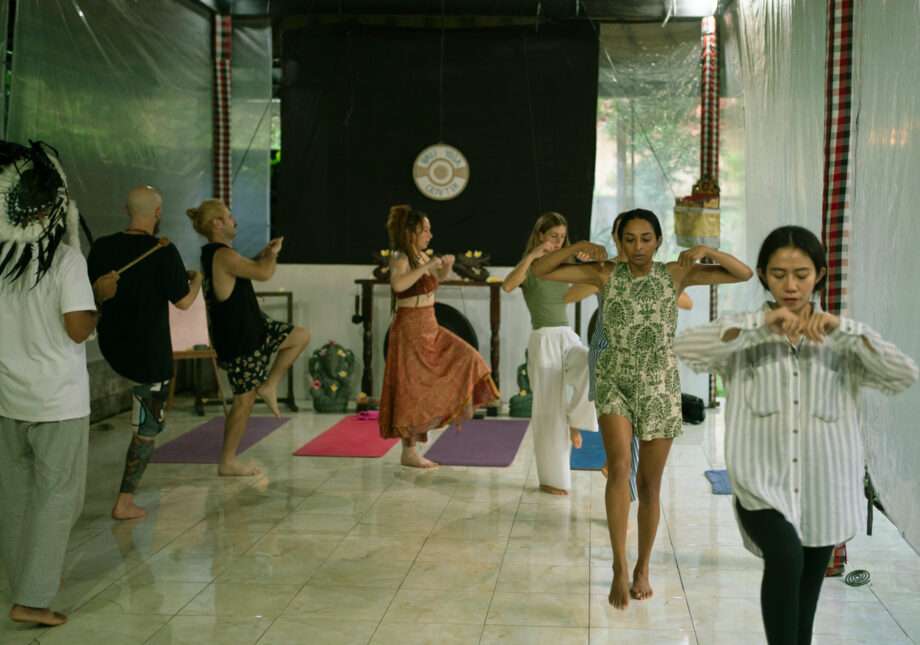
What Is Sarvo Somatic Flow? Breathwork with Movement and Release
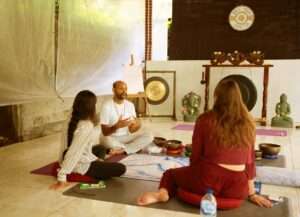
I get asked some version of the same question almost every week, usually by someone standing awkwardly at the back of the shala after class: “Is this the one where people dance and cry?“
Yes. Sort of. And it’s one of the most misunderstood practices I teach: Sarvo Somatic Flow.
Sarvo Somatic Flow is not a performance and it is not therapy in the clinical sense, though it borrows from both. It’s a breath practice that refuses to keep your body still while you do it. You breathe, and you move — shake, sway, stomp, reach, curl into a ball if that’s what the moment asks for. The stillness comes after, not during.
I’ve been guiding this work for over a decade now, alongside 25 years of study in yoga, Ayurveda, and pranayama, and I still watch it surprise people every single time. So let’s actually unpack what it is, where the idea came from, what a session looks like, who it’s genuinely not for, and how you’d go about training in it properly in Bali or anywhere else.
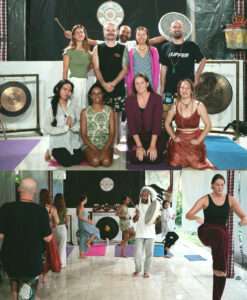
Sarvottam Kumar (Sarvottam Ji) is an E-RYT 500 and YACEP-certified yoga and breathwork instructor through Yoga Alliance with over a decade of teaching experience and 25 years of study in yoga and Ayurveda. He serves as Program Director at Bali Yoga Center in Ubud, where he personally leads all breathwork and sound healing trainings. For more info check this yoga authority.
Quick Answer, Before We Go Deeper
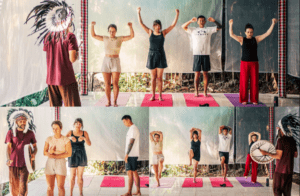
If you only have a minute: Sarvo Somatic Flow combines circular, connected breathing with free-form physical movement and rhythmic music (usually drumming) to help the body discharge stress and stored emotion, not just talk about it. I designed it myself, drawing on breath-and-movement traditions found across indigenous cultures worldwide — traditions that used breath, dance, and trance states for healing long before “breathwork” was a wellness-industry word — but it’s my own method, not a shamanic ritual, and I don’t present it as one. It is intense, it is not for everyone, and it’s best learned or first experienced under a trained facilitator.
Keep reading for the rest — the inspiration behind it, the science-adjacent reasoning behind the movement piece, the safety picture, and where you can actually train in it in Bali.
What Is Sarvo Somatic Flow, Exactly?
Most people have heard of classic shamanic breathwork: lying down, eyes closed, breathing in circular rhythm to evocative music while a facilitator holds space. Sarvo Somatic Flow uses that same breathing engine — inhale through the nose, exhale through the mouth, no pause between the two — but takes the body off the floor. I built it as its own distinct method rather than a variant of shamanic breathwork, though the breath mechanics share the same roots.
Instead of staying supine for the whole session, you spend part of it upright: swaying, shaking out your limbs, letting your arms move however they want to move, sometimes dancing outright to a drumbeat. The breath stays connected and rhythmic throughout; the body is simply given permission to respond to it instead of holding still.
Bali Yoga Center places Sarvo Somatic Flow among the more contemporary branches of the modern breathwork family tree — sitting alongside Rebirthing Breathwork and the Wim Hof Method as approaches that build on classical pranayama but push further into emotional and physical release. You can explore the difference between pranayama and breathwork as well as the fuller family tree of styles in this breakdown of modern breathwork approaches if you want the wider context before committing to one.
Where the Idea Actually Comes From
I designed Sarvo Somatic Flow myself — but not out of nowhere. It draws on a much older, cross-cultural well: rhythmic breathing paired with movement and drumming shows up across indigenous healing traditions on nearly every continent, long before modern “breathwork” existed as a category, and long before I ever stepped onto a mat.
The Kalahari Kung Bushmen of southern Africa have used fast, shallow breathing combined with all-night dancing to reach kia, a trance state their healers use to perform community healing rituals. Amazonian shamanic traditions pair breath with rhythm and, in some lineages, plant medicine ceremony, to move participants into altered states for healing work. Tibetan Tummo practice uses controlled breath to generate literal inner heat alongside physical posture and movement. That’s the thread I pulled on when building this practice: breath alone can shift consciousness, but breath plus rhythmic movement gets you there faster and lets the body finish what the breath starts, grounding the benefits of classical pranayama breathing techniques.
Modern shamanic breathwork, the version most Western practitioners encounter today, was shaped in the 1970s and 80s by facilitators drawing on these traditions alongside the psychological framework Stanislav Grof was developing around the same time with Holotropic Breathwork. Sarvo Somatic Flow is my own refinement, built on that same lineage of ideas — one that acknowledges something trauma-informed bodywork has been saying for years: the nervous system doesn’t always finish its story lying still.
Why Add Movement to the Breath at All?
Here’s the piece people usually don’t expect: the movement isn’t decoration. It has a function.
There’s a well-known observation from Amazonian shamanic tradition, referenced often in somatic trauma work — when a deer escapes a jaguar, it doesn’t calmly walk away. It trembles, twitches, and shakes its whole body before returning to grazing, completely unscarred by the encounter. The nervous system had a full-body stress response, and the shaking is how the body physically discharges it rather than storing it.
Humans mostly don’t do this. We freeze the shake. We hold the breath. We say “I’m fine” and go back to our desks. Sarvo Somatic Flow is built on the idea that if you give the body explicit permission to move while the breath is opening up stored tension, it will often do exactly what that deer does — shake, twitch, cry, laugh, push against the air — and complete something that’s been sitting half-finished for years.
That’s the working theory behind why this method pairs so well with people who feel emotionally “stuck” even after talk therapy or a regular asana practice. It works synergistically with practices like sound healing therapy for stress and emotional release. It’s also why Bali Yoga Center’s somatic breathwork training guide is worth reading if this idea of body-first, talk-second healing resonates with you — it goes deeper into the somatic side than this article has room for.
What a Session Actually Looks Like
No two sessions look identical, but the shape tends to hold steady:
- Grounding and intention — a short opening circle, sometimes with a simple mantra or intention-setting, so everyone arrives in the room before the breath starts.
- Warm-up movement — gentle swaying, shoulder rolls, some free-form shaking to loosen the body before the breath intensifies. This is where the movement part starts to show up.
- Active breathing phase — 20 to 45 minutes of circular, connected breathing (in through the nose, out through the mouth, no pause) set to rhythmic music or live drumming, with the facilitator cueing when and how to bring movement in.
- Peak and release — this is usually where shaking, dancing, sound (crying, laughing, toning) and sometimes stillness-within-motion shows up. It looks different for everyone in the room.
- Integration — lying down, breath slowing, often with sound healing instruments like Tibetan or crystal bowls layered in during immersive sound bath and breathwork events in Bali to help the nervous system settle.
- Sharing — a closing circle where participants can (optionally) speak about what came up, though nobody is required to explain their experience.
This short video shows what an actual multi-day training in this format looks like, from the breath work through the sound healing integration:
And if you want the 60-second version of why people come back to this work again and again:
The Benefits People Actually Report
I’m cautious about overselling this, because breathwork culture has a habit of promising a cure for everything. What I can say, based on what students consistently report and what’s echoed across the wider breathwork research base, is this:
- Nervous system regulation. The rhythmic breath pattern activates a stress response on purpose, in a controlled setting, then lets the body practice coming back down from it — which is a rehearsal for doing the same thing in daily life.
- Emotional release without needing to “talk it out.” Some people carry things they’ve never had language for. Movement bypasses the need for words.
- Reduced anxiety and lower reported stress. Rhythmic, deep breathing has a measurable effect on cortisol levels, and the physical release piece appears to extend that effect rather than dilute it.
- A stronger mind-body connection. Regular practitioners often describe feeling more “at home” in their own bodies, which asana practice alone doesn’t always deliver.
- Post-session clarity. Many people report the same thing after a strong session: a quieter mind for days afterward, not just hours.
For a deeper look at the therapeutic mechanics behind these claims, this article on whether breathwork can genuinely heal us is worth the extra ten minutes. And if you’re weighing this against a seated meditation practice, breathwork versus meditation for emotional release covers that comparison directly.
Is It Safe? Who Should Avoid It?
This is the section I actually want people to read most carefully, more than the benefits list above.
Sarvo Somatic Flow is a high-ventilation practice. That means it deliberately shifts the oxygen carbon dioxide balance in your blood, and it can trigger genuinely intense physical and emotional responses — shaking, tingling, waves of emotion, sometimes tears or laughter that surprise the person having them. For most healthy adults, in a properly facilitated setting, this is safe and often profoundly useful. It is not universally safe, and no responsible facilitator will tell you otherwise.
You should skip this practice, or only attempt a heavily modified version with a facilitator who knows your history, if you have:
- Cardiovascular disease, uncontrolled high blood pressure, or a history of heart attack
- Epilepsy or another seizure disorder
- A diagnosis of bipolar disorder, schizophrenia, or a recent psychiatric hospitalization
- Glaucoma or a detached retina
- Recent surgery or a significant unhealed injury
- Osteoporosis, where the physical movement component carries real fall or fracture risk
- Pregnancy (gentle breathwork is generally fine in pregnancy; this high-intensity style is not)
If any of that applies to you and you’re still curious, talk to your doctor first, and tell your facilitator before the session begins — not during it. A good facilitator will always screen for this before letting anyone into an active breathing round.
I made this video specifically to walk through who should sit a session out, because I’d rather someone skip one class than have a bad experience:
For the full picture on risk and how modern breathwork schools screen for it, this guide on whether modern breathwork is dangerous is the most thorough resource we’ve published on the topic.
How It Compares to Other Breathwork Styles
People often land on this page having already heard the names Holotropic, Rebirthing, or Wim Hof and wondering how Sarvo Somatic Flow fits alongside them. Here’s the short version:
| Style | Body position | Core technique | Best known for |
|---|---|---|---|
| Sarvo Somatic Flow | Standing, dancing, and lying down | Circular connected breath + free movement + drumming | Somatic release, discharging stored trauma physically |
| Classic Shamanic Breathwork | Lying down throughout | Circular connected breath + music, no movement | Journeying, trance states, inner-guidance work |
| Holotropic Breathwork | Lying down | Fast, deep breathing to evocative music | Deep psychological/emotional exploration |
| Rebirthing Breathwork | Lying down | Continuous, un-paused breathing | Processing early-life and birth-related patterns |
| Wim Hof Method | Lying or seated | Power breathing + breath retention + cold exposure | Physical resilience, cold tolerance, alertness |
None of these is objectively “better” — they’re tools for different jobs. If your body tends to store tension physically rather than process it emotionally through stillness, Sarvo Somatic Flow is usually the more effective entry point.
Who Is Teaching This: A Bit About Me
I mentioned this earlier, but it’s worth being specific here, because credentials matter in a field with very little regulation. I’m an E-RYT 500 and YACEP-certified instructor through Yoga Alliance, with a bit over a decade of dedicated teaching and 25 years of personal study across Ashtanga, Hatha, Ayurveda, meditation, and breathwork. I currently serve as Program Director at Bali Yoga Center in Ubud, where I lead the breathwork and sound healing programs myself — I don’t hand training days off to assistants.
Sarvo Somatic Flow blends the classical pranayama I studied for years with trauma-aware facilitation. I built it deliberately as my own method — not a repackaged shamanic ritual — because intensity without safety training, or without being upfront about where a technique actually comes from, is how this kind of work gets a bad reputation. If you want the fuller story of how I got here, my background and teaching philosophy and my facilitator profile go into more depth than fits naturally in this article.
Here’s a short clip from one of our recent 35-hour trainings, for a feel of the room:
Where to Learn It in Bali
If reading about this makes you want to actually feel it rather than just understand it intellectually, Bali Yoga Center runs two main training pathways out of Ubud, both of which I lead personally:
35-Hour Breathwork Teacher Training — a one-week intensive covering classical pranayama, modern breathwork styles including Sarvo Somatic Flow, Rebirthing, and Wim Hof-style work, breath retention practices, and enough teaching methodology that graduates leave able to hold sessions themselves. For those seeking advanced facilitator mastery, we also offer an advance breathwork teacher training in Bali. It carries Yoga Alliance continuing education credit (YACEP). You can see the full breathwork teacher training curriculum here.
Breathwork & Sound Healing Retreat — the same 35-hour breathwork curriculum, stacked with our Sound Healing Level 1 and Level 2 certifications. Both sound healing levels run 2:00 PM to 5:00 PM, Monday through Friday, with roughly 10 hours of guided practice per level plus self-guided practice afterward. Level 1 covers foundational work like aura cleansing, insomnia and tension therapies, and the 31-point sound healing meditation; Level 2 goes further into chakra healing with tuning forks, pendulum dowsing, and the 61-point meditation sequence through our specialized sound healing course in Bali and sound healing training in Bali. It’s a genuinely full plate, but pairing breath and sound in one training is one of the more requested combinations we offer — you can see the full retreat details here.
Both trainings suit complete beginners and working yoga teachers alike. If you’re wondering whether facilitation is a realistic path for you at all, this piece on becoming a certified breathwork facilitator walks through what the certification actually qualifies you to do afterward.
Frequently Asked Questions
What is Sarvo Somatic Flow? It’s a breathwork method I designed myself, combining circular, connected breathing with free-form physical movement — shaking, swaying, dancing — set to rhythmic music or drumming. It draws inspiration from breath-and-movement traditions found in indigenous cultures worldwide, but it’s my own technique, not a shamanic practice.
Why is it called Sarvo Somatic Flow instead of shamanic breathwork? Because I designed this specific technique myself rather than teaching an unbroken shamanic lineage. I drew inspiration from breath-and-movement traditions across several cultures, but I want to be upfront that this is my own synthesis — built on classical pranayama and informed by that wider history — not a shamanic ritual, so the name reflects that honestly.
How is it different from classic shamanic breathwork? Classic shamanic breathwork is typically done lying down for the entire session and belongs to older shamanic lineages rather than to me. Sarvo Somatic Flow is a distinct method I developed that adds standing, dancing, and physical release, based on the idea that the body needs to physically discharge tension, not just breathe through it.
Is it the same as Holotropic Breathwork? No, though they share some lineage. Holotropic Breathwork, developed by Stanislav Grof, keeps participants lying down and focuses on fast, deep breathing for psychological exploration. Sarvo Somatic Flow shares that intensity but deliberately incorporates physical movement as part of the release process, and it’s a method I built myself rather than a variation of Grof’s work.
Is Sarvo Somatic Flow safe? For most healthy adults, yes, when guided by a trained facilitator who screens participants beforehand. It is not recommended for people with certain heart conditions, seizure disorders, serious psychiatric diagnoses, recent surgery, or pregnancy. See the safety section above for the full list.
Do I need yoga experience to try it? No. Some familiarity with your own breath helps, but the practice is taught progressively, starting with gentle warm-up breathing before building intensity.
How long does facilitator certification take? Our core Breathwork Teacher Training is a 35-hour, one-week intensive, with the option to extend it into a combined Breathwork & Sound Healing Retreat for a fuller certification.
A Last, Honest Note
I won’t pretend this practice is for everyone, and I’d rather you read this whole article and decide it’s not for you than show up unprepared. But for the people it does land with, Sarvo Somatic Flow tends to do something a quiet meditation cushion never quite manages: it lets the body finish the sentence the mind has been avoiding for years.
If you’re ready to experience it or train in it, you can reach our team directly on WhatsApp, or read more about the full training pathway on our breathwork teacher training in Bali page.
