
How Many Singing Bowls Do You Actually Need to Start Practicing After a Sound Healing Course?
Have you completed certified sound healing training Bali? Graduating from a course leaves practitioners inspired, grounded, and eager to share the craft of vibrational therapy. But how do you know whether you need an entire orchestral array of instruments just to begin?
The short answer is no. Exploring the science of sound healing and singing bowls reveals that resonance and intention matter far more than equipment volume. The number of bowls you actually need depends on your immediate practice environment and client goals.
How Many Tibetan Singing Bowls Do You Actually Need To Start?
To start practicing after completing your sound healing training Bali, one to three bowls are generally sufficient for personal meditation, skill development, and basic one-on-one relaxation sessions. There is no official regulatory standard requiring a full set. As documented in studies on sound healing, a single instrument played with sensitivity and control offers far more grounding value than seven bowls struck erratically.
Starting With One Tibetan Singing Bowl: Beginning your post-course journey with a single instrument from a reputable source like our Tibetan singing bowls shop is one of the most effective ways to master the fundamentals of sound work. This allows you to develop essential tactile skills without distraction. A single medium-sized bowl placed near the practitioner provides an anchor for daily personal meditation, vocal toning, or beginning and ending a yoga class.
When Two or Three Singing Bowls: If your course covered acoustic contrast or multi-instrument pacing, choosing a set of two or three bowls provides a versatile palette. Working with three instruments teaches you how distinct tones interact. You learn to manage dissonance, monitor acoustic pacing, and transition smoothly without overwhelming a room. Consult a comprehensive Tibetan singing bowl buying guide for beginners to select harmonizing intervals.
When Should You Consider a Larger Collection?: An expanded collection becomes practical when your operational needs demand greater dynamic range and tonal variety. Practitioners hosting group ceremonies often advance to a curated 7 chakra singing bowls set or an artisan 7-piece full moon chakra set.
How To Choose Tibetan Singing Bowls After Sound Healing Training Bali
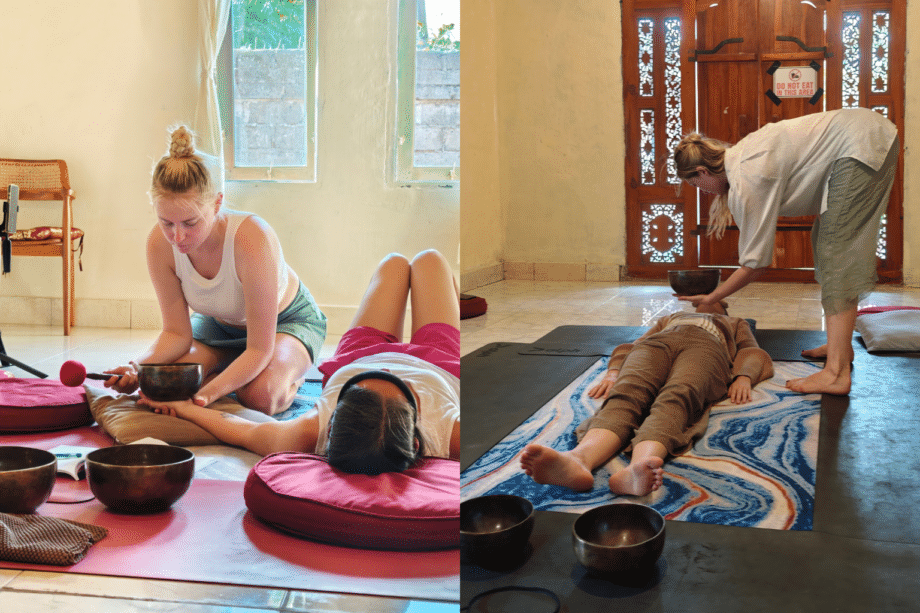
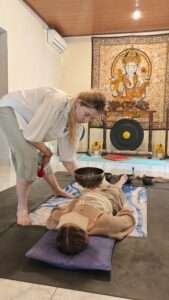
Review Your Practical Modalities: Did your training emphasize hands-on on-body placement, atmospheric sound baths, or sound integrated with restorative yoga? On-body techniques require stable, smooth-bottomed bowls, whereas ambient sound baths favor larger, resonant instruments. Knowing where to buy singing bowls in Bali ensures you inspect weight, thickness, and rim beveling in person.
Reflect on the Instruments You Handled: Consider which sizes and mallets felt most natural in your hands during practical exercises. Understanding the handcrafted quality of singing bowls protects you from thin, machine-pressed brass that loses vibration quickly.
Account for Transit Realities: If you decide to buy Tibetan singing bowls in Southeast Asia to bring home, verify baggage weight allowances. Ensure fragile edges are cushioned with high-density foam inside rigid travel cases, or order verified premium singing chakra bowl sets shipped directly to your studio.
Does Completing Your Certification Mean You Are Ready To Start A Business?
Graduating from a course marks the beginning of your apprenticeship with sound, not an immediate commercial guarantee. Offering professional sound healing therapy in Bali or in your hometown requires more than collecting bowls:
Dedicated Practice Hours: Gaining hands-on confidence by playing for friends and family across varied environments.
Operational Readiness: Securing appropriate professional indemnity insurance, establishing intake boundaries, and complying with local business regulations.
Ethical Scope of Practice: Understanding that sound therapy supports general relaxation and stress reduction, and must never be marketed as a substitute for licensed medical or psychological treatment.
Enroll in certified sound healing training Bali at Mantra Yoga Meditation School, or explore our immersive sound healing training course in Bali and sister modules for a comprehensive sound healing course in Bali. Contact us today for more details.
