
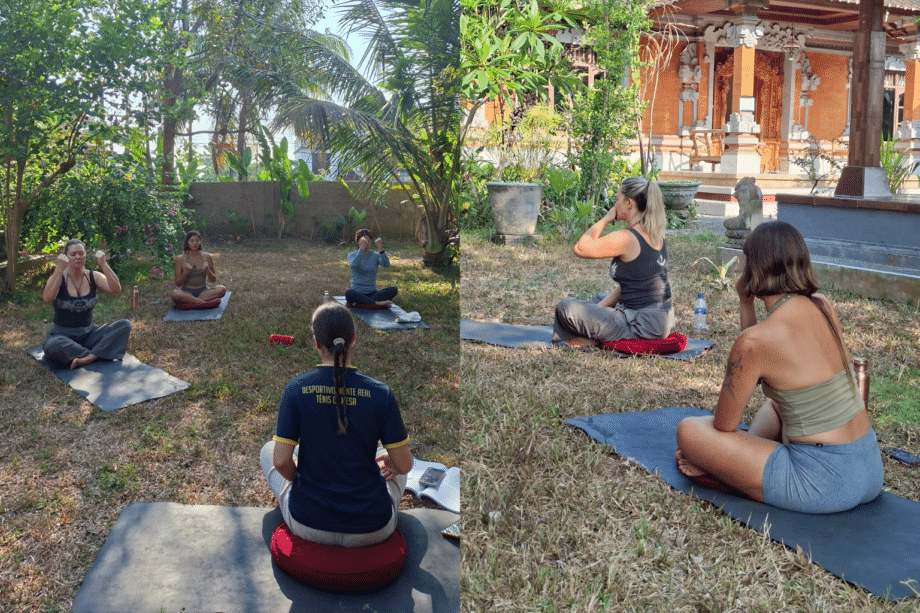
Marma Point Therapy & Nervous System Grounding: How to Safely Hold Space During Tetany and Emotional Release in Breathwork
During an intensive conscious breathing session, a participant begins hyperventilating, their fingers stiffen, and tingling radiates across their face. As a facilitator in a professional breathwork training course, should you encourage them to breathe through the intensity, attempt hands-on energetic release, or stop the session immediately?
Navigating unexpected physiological and somatic reactions is one of the most critical responsibilities taught in a modern breathwork teacher training in Bali. Safe facilitation requires the ability to distinguish between benign physiological shifts, acute distress, and emergent medical events, drawing from both modern science and the therapeutic benefits of breathwork.
What Is Marma Point Therapy?
Marma point therapy is an ancient Ayurvedic practice focused on 107 vital anatomical junctions where physical structures (muscles, veins, ligaments, bones, and joints) intersect with subtle energy pathways (prana), deeply rooted in Ayurvedic principles.
Within breathwork, marma therapy must be contextualized strictly as an optional, complementary modality for subjective comfort. Facilitators should never perform hands-on marma manipulation without specialized training, recognized credentials, and explicit, real-time participant consent. Understanding the difference between pranayama and modern breathwork helps practitioners respect these structural and energetic boundaries.
Understanding Nervous System Grounding During Breathwork
Nervous system grounding in breathwork refers to a set of non-invasive, orienting strategies designed to help a dysregulated participant reconnect with their immediate physical environment, regain emotional safety, and re-establish cognitive agency. As explored in our somatic breathwork guide for future facilitators, grounding allows the autonomic nervous system to self-regulate without coercive force.
Grounding is not an absolute cure for panic attacks, medical crises, or severe psychological dissociation. Furthermore, sensory preferences vary. Facilitators must maintain flexibility and adapt grounding choices to the individual’s comfort level.
What Is Tetany During Breathwork?
Tetany in breathwork refers to sustained, involuntary muscle twitches, spasms, and cramping—most commonly manifesting as rigid flexion of the hands and wrists—triggered by rapid or deep breathing patterns. Physiologically, hyperventilation causes hypocapnia (reduced carbon dioxide in the blood), which increases blood pH and alters calcium binding, as detailed on Healthline.
How To Respond When A Participant Experiences Tetany-Like Symptoms
When a participant develops hand cramping, distress, or muscle rigidity, facilitators should execute an educational, safety-first response protocol focused on de-escalation:
- Pause the intensive breathing exercise immediately.
- Assess responsiveness and airway.
- Offer grounding and reassurance.
- Maintain spatial and touch boundaries.
- Normalize without diagnosing or spiritualizing.
- Recognize clinical red flags and escalate.
- Document and debrief responsibly.
How To Hold Space During Emotional Release Without Overstepping
Holding space is the art of maintaining a grounded, non-intrusive container that supports personal autonomy without attempting to guide, interpret, or control the participant’s journey. Facilitators studying modern breathwork techniques for emotional release anchor their space-holding in clear practical habits:
- Practice non-intervention by default.
- Offer open-ended choices.
- Maintain objective boundaries.
- Normalize the right to discontinue.

What A Responsible Breathwork Training Course Should Teach
Aspiring and practicing facilitators should select their professional education based on clinical rigor and safety standards. A comprehensive breathwork training course must equip facilitators with practical, evidence-based competencies that extend far beyond simply cueing music and demonstrating breathing rhythms. Reviewing contraindications and who should avoid intensive breathwork is foundational for any serious educator. Essential components of an industry-standard curriculum include:
Respiratory Physiology: In-depth study of gas exchange, pulmonary mechanics, hypocapnia, and the biomechanics of autonomic regulation.
Rigorous Health Screening: Practical instruction on screening for cardiovascular disease, severe hypertension, aneurysms, epilepsy, retinal detachment, pregnancy, and psychiatric histories.
Systematic Adverse Response Management: Step-by-step protocols for managing carpopedal spasms, acute panic, hyperventilation-induced fainting (syncope), and severe dissociation.
Trauma-Informed Ethics: Concrete training in consent architecture, dynamic power imbalances, cultural humility, and the avoidance of spiritual bypassing.
First Aid and Medical Triage: Clear guidelines on when to pause a session, when to refer a client to a licensed psychotherapist, and when to call emergency medical services.
Supervised In-Person Practicums: Hands-on, evaluated facilitation hours where students receive direct feedback from experienced mentors during simulated adverse events, such as those provided in advance breathwork teacher training programs.
Conclusion
Completing a rigorous breathwork training course in Bali should provide the expertise to assess risks, communicate effectively, implement non-invasive grounding, and respect scope of practice. Many practitioners also seek programs that offer recognized continuing education with Yoga Alliance.
Join our comprehensive breathwork teacher training at Bali Yoga Center or explore holistic training options at our sister school through their breathwork and sound healing training retreat in Ubud and breathwork training programs at Mantra Yoga Meditation School. Contact us today for upcoming dates and enrollment details.
